Amnesty International Sounds the Alarm: Global Human Rights Under Threat

Amnesty International’s yearly report indicates that the worldwide framework of rule-based human rights is under threat.
As stated by the UK-based human rights group Amnesty International, we find ourselves at a pivotal moment concerning global human rights. The organization’s report highlights attacks driven by religion, patriarchy, and racism against established systems such as human rights treaties, fundamental human rights principles, international humanitarian laws, and tribunals created by nations following the atrocities committed during Nazi rule and World War II.
In the preface to their annual report, Agnes Callamard, the International Secretary General of Amnesty International (AI), notes, "Forces never seen before are pursuing the principles of universal human rights, aiming to dismantle the global framework established through the sacrifices made during World War II and its Holocaust." Every year, Amnesty International evaluates the state of human rights across 150 nations.
Rising aggression towards ordinary people and minority groups
The yearly report from Amnesty highlights three major continuing patterns. Primarily, people caught in conflicts in regions such as Sudan, Gaza, Ukraine, and the Democratic Republic of Congo face growing pressures.
"The rules that are supposed to apply in conflicts, the red lines that the international community has set itself, are being more and more disregarded," Julia Duchrow, the secretary general of Amnesty's German section, told .
Secondly, specific groups faced increased risks in numerous nations, notably individuals within LGBTQ+ communities, as well as refugees and dissenters.
Moreover, thirdly, states were progressively neglecting their responsibility to address this human rights emergency. This trend was notably evident in countries like the United States, which had previously been dedicated to upholding universal human rights principles.
Duchrow stated that the US government is exacerbating this human rights crisis, potentially endangering billions of individuals globally.
She noted that imposing sanctions on the International Criminal Court and the U.S. withdrawing from the UN Human Rights Council was akin to using an axe to dismantle international law.
Israel and Gaza back in the spotlight
The human rights NGO has once more highlighted the situation in Gaza, where tens of thousands of individuals have lost their lives due to the ongoing conflict. This escalation began following an assault carried out by Hamas—a group designated as a terrorist organization by countries such as Germany, the U.S., and those within the European Union—on October 7, 2023. In response, Israel initiated a military campaign in Gaza.
Amnesty International alleges that Israel is carrying out "genocide" against Palestinians.
"The states observed passively, as if helpless, while Israel caused the deaths of countless Palestinians, obliterated entire multi-generational family units, demolished homes, disrupted livelihoods, hospitals, and schools," according to the report.
The group presented a comparable case in a roughly 300-page document released in December 2024.
The claim of genocide is contentious. The Israeli administration strongly opposes this notion, and certain scholars specializing in international law have similarly challenged the appropriateness of using such terminology. Stefan Talmon, an authority from both Germany and Britain, criticized Amnesty’s document for having weak legal reasoning. Conversely, groups like Human Rights Watch have leveled accusations against Israel, labeling acts like intentionally causing food shortages among civilians in Gaza as genocidal behavior.
Sudan: A humanitarian disaster
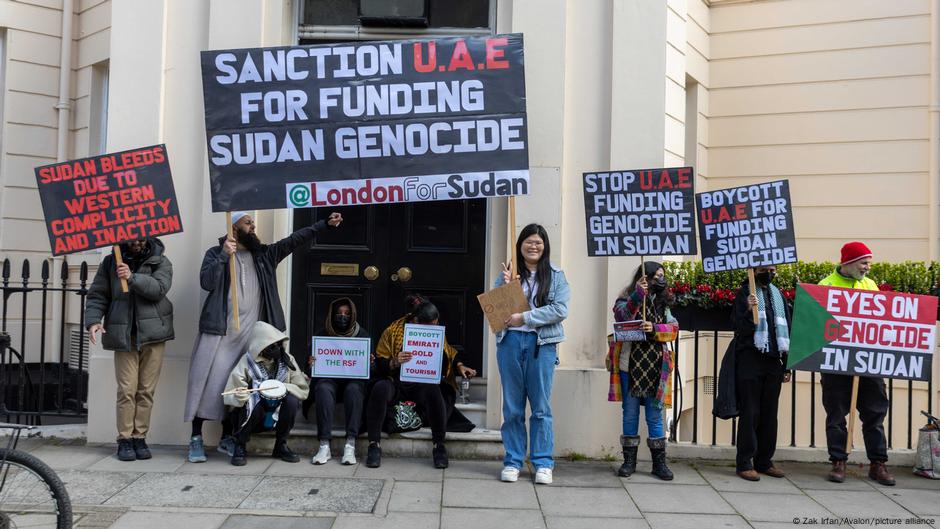
This year’s annual report includes the situation in Sudan as well. The nation has been caught up in a civil conflict lasting over two years now, resulting in severe repercussions for civilians, with tens of thousands reported casualties by the United Nations. According to Amnesty International, Sudan holds the grim distinction of having seen more displacement than any other place globally.
The previous US administration labeled the actions of the insurgent group as "genocide." On the other hand, Amnesty International describes incidents of violence from both parties and advocates for an arms embargo. Nevertheless, Germany’s AI Secretary General Duchrow didn’t dismiss the potential that the organization might eventually determine that a genocide occurred in Sudan.
Criticism of Germany
Germany faces critique over several modifications concerning the rights of migrants and refugees. According to Amnesty International, these include an increase in law enforcement’s ability to enter properties, conduct searches, and detain individuals, as well as a heightened chance of improper incarceration for those seeking asylum within the country. Additionally, the organization highlights the recommencement of deportation processes targeting people from Afghanistan and Syria, along with halting Syrian asylum claims and reinstating Schengen border controls without requiring reasonable cause.
AI also denounces the "use of excessive force in the police response to protests involving climate activists and those supporting Palestinian rights."
Initiate reflection on human rights
Amnesty is calling for a return to the rules-based order of human rights and for governments to respect human rights and international law. According to Duchrow, this would include respecting and complying with international arrest warrants such as the one against Israeli Prime Minister Benjamin Netanyahu. She also believes that reform of the UN Security Council is necessary.
However, the Secretary-General of Amnesty Germany also pointed out several favorable advancements.
“We repeatedly observe both favorable and unfavorable changes,” Duchrow stated. “Human rights significantly influence those who march for change. Therefore, we urge governments to place human rights at the core of their strategies. However, this naturally demands dedication from every individual; it relies on each one of us.”
The original version of this piece was penned in German.
If you’re still around: Each Tuesday, our team of editors compiles an overview of current events in German politics and society. You can subscribe here for the weekly email newsletter called Berlin Briefing.
Author: Lisa Hänel