WTO Calls on Africa: Enhance Intra-Continental Trade, Break Free from Global Dependencies

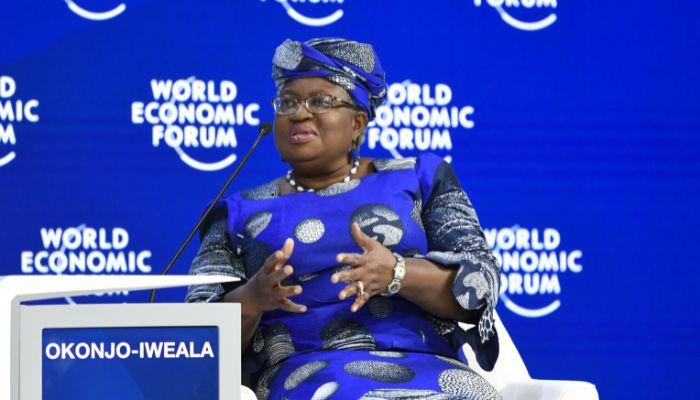
On April 26, 2025, Addis Ababa — In response to the potential impact of extensive new U.S. tariff policies, Ngozi Okonjo-Iweala, the Director-General of the WTO, cautioned on Friday that Africa needs to hasten initiatives aimed at increasing intra-continental commerce and decreasing reliance on major international economies. --- April 26, 2025 – At an event held in Addis Ababa today, Ngozi Okonjo-Iweala, who serves as the Director-General of the WTO, alerted African nations about the impending effects of broad-ranging new American import taxes. She emphasized the urgency for these countries to expedite actions designed to enhance regional trading activities and diminish their dependency on leading world economic forces.
At the margins of the IMF and World Bank Spring Meetings in Washington, Okonjo-Iweala minimized the broad economic effects of the tariff increases implemented in early April by President Donald Trump. She pointed out that merely 6.5% of Africa’s exports head towards the United States, while only 4.4% of its imports come from America.
Nevertheless, she pointed out that the larger scenario highlights a more significant weakness: Africa is not engaging sufficiently in trade, whether within its own borders or with external markets.
We aren’t engaging in significant trade, and this is problematic," she informed journalists at the gatherings. "Moreover, within Africa, several nations are experiencing severe repercussions.
She stated that one of the most affected places is Lesotho, a tiny, low-income nation which might experience a reduction of almost half a percent in its GDP growth.
The country exports roughly 200 million USD in textiles to the U.S., while importing just 3 million USD in return. Under the new reciprocal tariff regime, Lesotho faces levies as high as 50 percent on its outbound goods.
If these tariffs come into effect, Lesotho stands to lose many of its exports to the U.S.," Okonjo-Iweala stated. "Even though it might gain somewhat by selling more goods elsewhere, the overall loss would still be substantial.
Ghana and Côte d'Ivoire also encounter significant difficulties. While Ghana faced a 10 percent tariff, Côte d'Ivoire, known as a major agricultural force exporting around $1 billion worth of cocoa to the United States, experienced a 21 percent duty increase.
The head of the WTO cautioned that these actions might disrupt West African economies, which largely depend on a limited selection of goods for export.
“If you have differential reciprocal tariffs, Côte d'Ivoire’s cocoa revenue could shift to another country,” she warned.
While appealing to Washington to consider exemptions for the poorest nations, Okonjo-Iweala said the continent must not wait for outside leniency.
She said the message is simply that Africa must become more self-reliant. “Aid is disappearing. We need investment.”
She highlighted the critical necessity of mobilizing internal funds, simplifying regulatory hurdles, and most importantly, enhancing cross-border trade within Africa, which presently constitutes just 16% to 20% of the continent's commercial activities.
We cannot continue to be vulnerable to outside disruptions," Okonjo-Iweala stated. "This should serve as an awakening.