War Memorial to Honor Soldiers Who Fought Against Britain: A New Chapter in Remembrance (International Edition)

The University of Oxford is urging council officials to permit the inclusion of five soldiers on a war memorial, despite their opposition to Britain during the conflict. First World War .
Queen's College has submitted an application to the planning authorities with the intention of including 'members of the college community' among the 121 individuals already listed on the memorial situated on High Street in Oxford.
However, critics argue that this change, which permits the addition of three German soldiers, is akin to 'woke' politics.
Created by Sir Reginald Blomfield and revealed in October 1920, the monument honors individuals who served with the Allied forces. However, a recent submission to the Oxford City Council seeks to have the memorial acknowledge everyone associated with the college, regardless of their national origin.
The list of names to be included features Carl Heinrich Hertz, born in Hamburg, Germany, as well as Gustav Adolf Jacobi, hailing originally from Weimar.
Erich Joachim Peucer, born in Colmar—which was part of the German Empire at that time—and who passed away in Italy In 1917, this is also included among the supplementary names.
The remaining two individuals include Hungary's Paul Nicholas Esterházy, who enrolled in 1901 and passed away in 1915. Poland , and Emile Jacot who sustained injuries during combat, ultimately passing away from those wounds in 1928.
The monument includes two large stone slabs, adorned with bronze garlands. It bears the inscriptions: "They offered their lives to the Commonwealth and gained immortal memories," and "'Their praise shall endure forever.'"


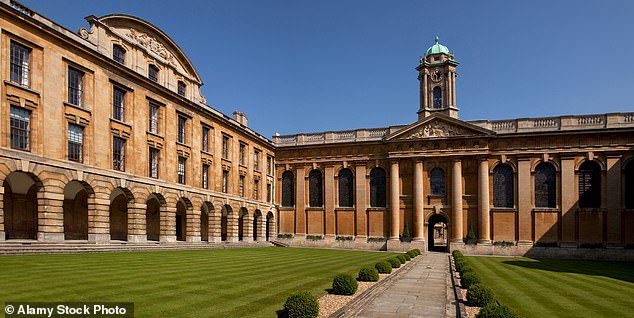
The planning document noted: "The World War I monument exterior to the library excludes individuals who were not part of the British forces."
This was typical for the period when the monument was built (1921). Initially, colleges would not honor those who had fought against the Allies in their memorials—whether this omission was due to a conscious choice or simply overlooked.
To summarize, we believe that these suggestions represent a suitable and non-invasive approach considering the surrounding architecture. They are warranted due to the necessity of honoring every member of the college community who perished in the First World War, regardless of their national origin.
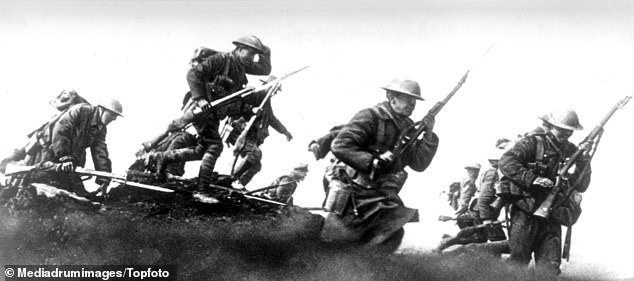
However, Richard Tice, the deputy leader of Reform UK, stated that the monument should solely function as a tribute to those who battled for Britain and the Allied forces.
He stated to The Telegraph, "The war memorials in the UK ought to serve as reminders of those who made the ultimate sacrifice to safeguard and defend the Allied countries."
Where will this nonsense stop?
Out of the 14,561 members from Oxford University who joined the military service during that time, approximately one-fifth had lost their lives by the conclusion of the First World War.
Among those who lost their lives was the distinguished military leader Douglas Haig, 1st Earl Haig, along with the composer George Butterworth.
The Oxford City Council is anticipated to reveal its verdict within the coming several weeks.
MailOnline has reached out to Oxford University for their input.
Read more