How to Craft a Standout CV Without Experience: Tips for Your Attachment Application

Are you searching for guidance on writing a CV for your placement? Securing a placement or internship might seem challenging, particularly when you have limited professional experience. Nonetheless, obtaining such an opportunity is vital for acquiring hands-on skills and establishing a base for your future career. Thus, crafting a persuasive CV that emphasizes your abilities and eagerness to learn could be pivotal in capturing your prospective employer’s interest.

An impressive resume goes beyond being merely formal; it acts as your key to career prospects. It creates an initial impact, grabbing the interest of possible employers and distinguishing you from competing applicants.
Advice on crafting a CV for an internship with limited experience
Crafting a CV with limited work experience might seem daunting, yet it’s entirely possible. Below are some suggestions to assist you in developing an excellent CV tailored for college students:
Emphasise on your education
Include details about your degree, relevant coursework, academic achievements, and any projects or research pertinent to the attachment you're applying for. This shows your knowledge base and enthusiasm for the field.
Emphasize your most versatile abilities
Despite lacking work experience, you probably possess skills that can be valuable in different situations. Highlight soft skills such as communication, collaboration, problem-solving, and flexibility, and support these claims with instances from your academic endeavors, club memberships, or athletic pursuits.
Tailor your resume for the position
Customize your CV for each application by matching your experiences and abilities with what the job posting asks for. Incorporate key terms used in the job description and highlight how your past achievements make you well-suited for the position.
Utilize a professional curriculum vitae format
Make sure your resume is professionally structured, simple to read, and free of errors. Employ distinct headers and bullet points for quick browsing, and keep font styles and spacing uniform throughout.
What is the most effective resume format for students?
Crafting an effective resume is essential for students embarking on their professional paths. An excellent student resume highlights their educational accomplishments along with pertinent experience and abilities that set them apart. While numerous student resume samples are available for reference, these key components should always be incorporated into a strong student resume: 1. Contact Information 2. Personal Profile or Objective Statement 3. Education Details 4. Relevant Experience (internships, part-time jobs) 5. Key Skills (technical and soft skills) 6. Extracurricular Activities and Achievements 7. Recommendations or References Incorporating these sections will help create a comprehensive and impactful resume tailored specifically for students.
Contact details
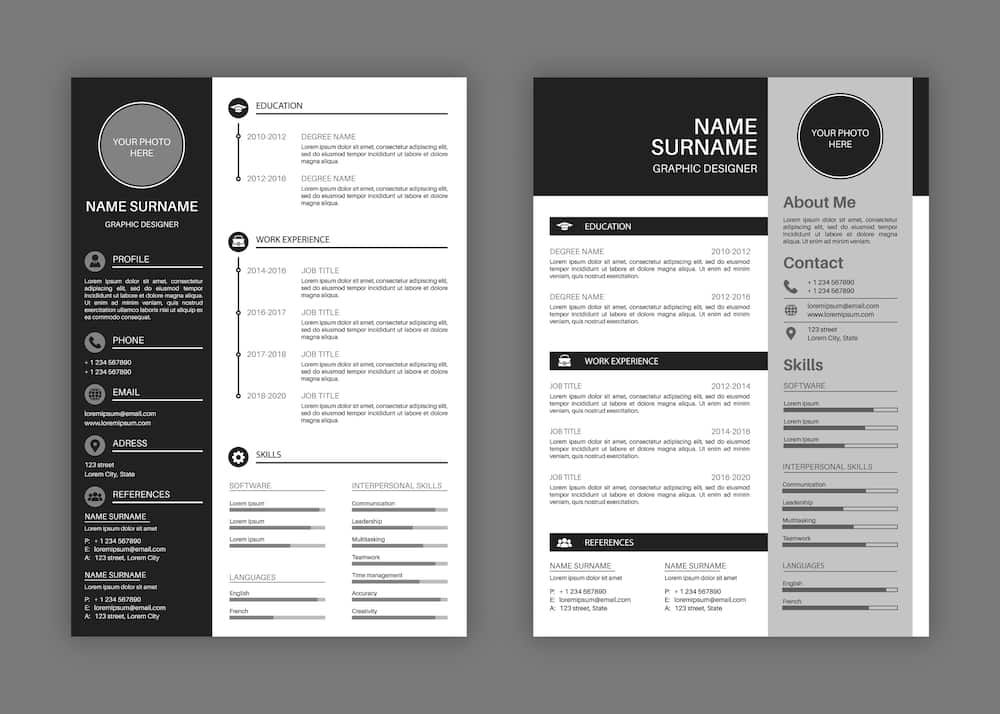
This segment offers employers the crucial data needed to reach out to you for interview arrangements or additional questions. Correct contact info guarantees that potential jobs aren’t lost because of poor communication. The following details should be included here:
- Complete name: Provide your entire legal name exactly as it appears on official identification documents.
- Please share a dependable telephone number at which you can be readily contacted.
- Use a professional email address, ideally one that incorporates your name.
- Current residence: Provide your present home address, or share only your county, city, or town if you wish to maintain privacy regarding your complete location details.
- Include a link to your LinkedIn profile if it is current and appropriate for professional use.
Profile summary
This part provides an overview of your credentials, background, and career aspirations. It offers employers a quick glimpse into why you would be a solid match for the role. Include essential points like pertinent abilities, significant accomplishments, and professional ambitions aligned with the specific job you're seeking.
Education
This part covers your educational history, typically a crucial factor for employers assessing how well you might fit into a position. It should encompass:
- Certification(s) attained: Explicitly mention the certification(s) you have acquired (for example, Bachelor of Science, Master of Arts).
- Include the title of the educational institutions where you studied.
- Start and End Dates: Please supply the commencement and conclusion dates for every academic program you have completed.
- Area of Study: Please indicate your primary field or discipline of study.
- Accomplishments and distinctions: Include notable academic accolades, prizes, or acknowledgments (such as placement on the Dean's List, grants).
Work experience
This part highlights your practical abilities, dependability, and professional contributions to the company. Should you lack formal work experience, this section ought to encompass:
- Highlight your volunteering roles by emphasizing the duties you undertook and the accomplishments you achieved.
- Include your positions within clubs, sports teams, or organizations that showcase your abilities in leadership, collaboration, and other important competencies.
- Projects: Detail any pertinent academic or personal initiatives related to the position, specifying your responsibilities and the competencies you utilized or acquired.
- Freelance or part-time positions: Include any freelance projects or part-time roles you've had, regardless of whether they align with your target industry.
Skills
This part needs to emphasize the particular talents and competencies that qualify you for the job. This enables the employer to swiftly evaluate if you possess the required skills for the internship position. It must encompass:
- Technical Skills: Enumerate all applicable technical competencies you possess, including expertise with particular software, command of programming languages, or familiarity with key tools and technologies related to the position.
- Highlight Soft Skills: Emphasize your people skills such as communication abilities, collaboration, issue resolution, and leadership qualities.
- Certifications and Training: Include pertinent certificates, classes, or educational programs that strengthen your credentials.
- If relevant, mention the languages you know along with your skill levels.
Achievements
This section highlights your achievements and your capability to produce tangible outcomes, distinguishing you from other applicants. It offers clear proof of your abilities and triumphs, illustrating the possible worth you could bring to an employer. This segment ought to encompass the following points:
- Awards and Honors: Please list any accolades or recognitions you have obtained, be they related to your studies or out-of-class endeavors.
- Mention significant initiatives you've finished, specifying your responsibilities and the outcomes or effects produced.
- Cited works: Include any published materials like journals, research documents, or texts whenever relevant.
- Key Achievements: Emphasize your principal accomplishments, including hitting crucial goals or participating in notable successes.
Interest and hobbies
This segment offers a broader perspective on you as an applicant, highlighting your personal traits, interests, and activities beyond your professional or academic life. It assists employers in assessing whether you would be a good cultural match and gaining insight into different facets of your personality. This portion should encompass:
- Highlight hobbies related to the job or field, showcasing your passion and dedication.
- Hobbies: Share some of the top hobbies that will set you apart and ignite curiosity or discussion.
- Innovative Ventures: Mention any inventive endeavors like composing, painting, or playing an instrument that showcase your innovative thinking and ability to solve problems.
Additional aspects to keep in mind while crafting your resume

When crafting your initial professional resume, adhere to these guidelines for formatting and style:
- - Summarize using brief phrases. - Begin each point with an action word. - Keep sentences concise and clear.
- Make sure it’s easy to read.
- Keep it left-aligned.
- Sure, I understand you want me to add line breaks after each paragraph when providing my responses. Here’s an example of how your request will be handled: --- Original Text: This is the first sentence. And this is the second. Paraphrased with Line Breaks: This is the first sentence. And this is the second. --- I’ll ensure all future responses follow this format. Let me know if there’s anything else you’d like adjusted!
- In this manner, write from the perspective of the speaker but omit all personal pronouns.
- Don’t use tables
- Use either a font size of 11 points or 12 points.
- Set your line spacing to either 1.0 or 1.15 to make it easier to read.
Final word
Many newly graduated professionals and current students often seek advice and guidelines on crafting an effective CV for internships. Even without extensive job experience, it’s possible to create a compelling CV. Highlighting your academic achievements, pertinent abilities, and extracurricular successes can help demonstrate your value to prospective employers.
The .co.ke website has posted an article on how to write an official letter. Clear communication continues to be essential across various facets of life, with formal letters being fundamental in professional exchanges.
Regardless of whether you’re seeking employment, communicating with a governmental body, or lodging a formal grievance, composing a lucid and properly articulated official correspondence can substantially impact the outcome. To learn how to pen such a letter efficiently, continue reading this piece for guidance on conveying your point clearly through your writing.