Audi A5 Plug-In Hybrid Boasts Larger Battery than First Nissan Leaf


The electric motor is positioned between the gasoline engine and the transmission, allowing for a seven-speed electric vehicle setup at times.
- The latest Audi A5 hybrid is capable of traveling up to 68 miles using only electric power.
- An electric motor is positioned between the 2.0-liter gasoline engine and the seven-speed automated gearbox.
Audi It was evident when it stated that it would. invest in plug-in hybrids in the near future Sales of their fully electric vehicles dropped sharply. Last year. And the upscale German carmaker isn’t losing any time as it implements its plan.
The latest model from Audi is the new A5 plug-in hybrid, officially named the A5 e-hybrid. It follows closely after its smaller counterpart, the A3 PHEV , which was launched last year as one of the longest-range plug-in hybrid electric vehicles (PHEV) in Europe.
The Audi A5 plug-in hybrid may not lead in electric-only range, yet it remains a solid option for those hesitant about fully adopting an electrified way of life. Actually, the A5’s high-voltage battery capacity exceeds that of the initial Nissan Leaf model—and if this doesn’t highlight the significant advancements in battery tech over the last ten years, nothing else will.
More PHEVs
- Creating a plug-in hybrid vehicle is much more challenging than you might imagine.
- The 2025 Mitsubishi Outlander PHEV Lacks a Crucial Upgrade
- Nearly half of Volvo's global sales in 2024 were comprised of EVs and PHEVs.
- Plug-in hybrids have arrived, but potential buyers remain unconvinced.
Just a quick refresher: A plug-in hybrid car employs both a conventional internal combustion engine and an electric motor powered by a high-voltage battery. To put it simply, this system is rather complex and comes with the drawback of lugging around a hefty battery during gas-powered travel. Conversely, when running solely on electricity, you still have to carry the weight of the combustion engine.
Given these points, if charging the battery from home is an option, a plug-in hybrid electric vehicle (PHEV) turns into an excellent pick for individuals who prefer not to rely on DC fast chargers, regardless of the reasons behind their preference.
For the Audi A5 e-tron hybrid, you'll find a 2.0-liter petrol engine with 248 horsepower beneath the bonnet, paired with a seven-speed dual-clutch gearbox. The model range includes a sedan and a station wagon variant, each equipped with Audi's signature Quattro all-wheel-drive system. Furthermore, nestled between the internal combustion engine and the transmission lies an electric motor.
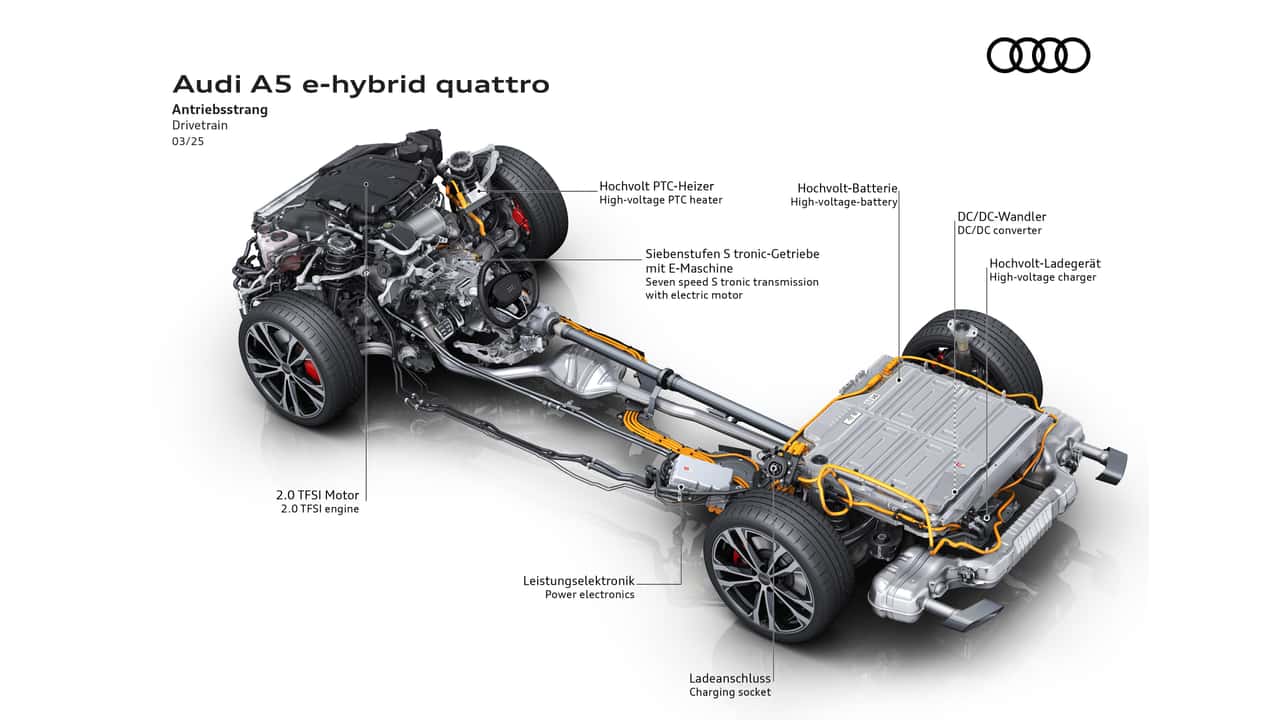
The electric motor generates up to 140 horsepower, with the total system output varying based on the model—either 295 horsepower or 362 horsepower. Consequently, the top-tier variant of the A5 PHEV rivals the performance of the V-6-driven Audi S6. The positioning of the electric motor between the gasoline engine and the transmission allows for the utilization of both the firm’s Quattro AWD system and all seven gear ratios when operating solely on electric power.
The zero to 62 miles per hour (0-100 kilometers per hour) sprint is dealt with in 5.1 seconds for the most powerful version, while the 295 hp variant needs 5.9 seconds. Both can reach a top speed of 155 mph (250 kph).
The electric motor draws power from a 20.7-kWh (25.9 kWh gross) lithium-ion battery pack, providing an estimated all-electric range of up to 72 miles (116 kilometers) under theWLTP urban driving conditions. For mixed-use scenarios as per WLTP standards, Audi claims an electric range of around 68 miles (110 km). To put this into perspective, when the initial model of the Nissan Leaf—the pioneering mass-market electric vehicle—was introduced, it featured a 21 kWh (24 kWh gross) battery capable of traveling approximately between 70 to 80 miles before requiring recharge.
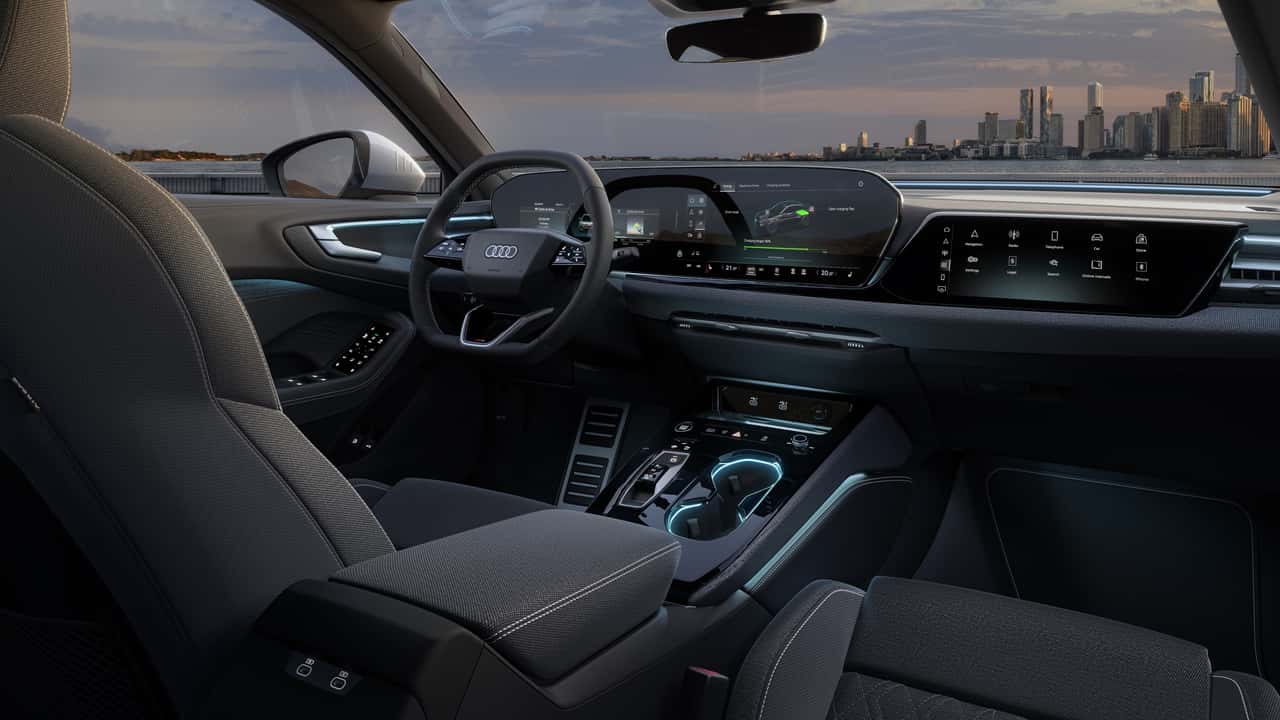
The high-voltage battery of the A5 PHEV can only be charged from an AC power supply with a maximum capacity of 11 kW. This represents an improvement over Audi’s earlier models, which were limited to charging rates of up to 7.4 kW. When operated at top efficiency, the battery of this plug-in A5 model can achieve a complete charge—from empty to fully powered—in approximately two and a half hours.
The German car manufacturer mentioned that they put significant effort into optimizing how their new hybrid system functions in practical scenarios. Unlike the older A6 plug-in hybrid, the upcoming A5 PHEV aims to operate primarily using electric power whenever feasible. Additionally, the updated model can recover more energy during braking compared to its predecessor, with an increased capacity of 88 kW for regeneration. Several different levels of brake regeneration are also provided.
The vehicle features an automated mode that adapts the regeneration level based on navigation data and input from the traffic sign recognition system. However, drivers have the option to adjust this setting manually through paddles located behind the steering wheel, similar to certain electric vehicles. Users can choose between three different recovery settings, plus there is a level zero which allows for freewheeling when the accelerator pedal is released.
The Audi A5 e-tron offers two modes: pure electric vehicle (EV) operation or hybrid functionality. Through the car’s infotainment interface, drivers have the option to keep their battery charged at a specific level or utilize the gasoline engine to recharge it during travel. When charging via the internal combustion engine, the electric motor functions solely as a generator when exceeding 40 mph (65 km/h). Under full EV mode, the top speed is capped at 87 mph (140 km/h).
Based on WLTP efficiency ratings, the new Audi A5 e-hybrid achieves approximately 117 to 87 miles per gallon (equivalent to 2.0 to 2.7 liters per 100 kilometers) when fully charged. The combined electrical energy usage is rated at around 4.1 to 3.9 miles per kilowatt-hour (or 14.9 to 15.9 kWh per 100 kilometers). When running solely on fuel without charge from the battery, the fuel economy drops to roughly 37 to 31 miles per gallon (which converts to 6.3 to 7.4 liters per 100 kilometers).
The Audi A5 plug-in hybrid includes a standard electric air conditioning unit and a resistive (PTC) heater. These allow for pre-conditioning of the interior prior to departure, similar to what you'd find in a fully electric vehicle. Additionally, customers have the option to activate supplementary comfort functions such as heated seats, ventilated seats, heated steering wheels, and glass pane heaters through the auxiliary air conditioning setup. The car also comes equipped with a tri-zone automatic climate control system as a standard feature.
The starting price for the Audi A5 Sedan e-Hybrid is $67,300 (€62,500), whereas the Avant variant begins at $69,000 (€64,150). For more powerful editions, you'll pay from $76,300 (€70,900) for the sedan and $78,000 (€72,550) for the station wagon. Orders can be placed now across Europe, with shipments scheduled to commence next month. At this point, there has been no announcement regarding whether the A5 PHEV will reach the U.S., though the current generation of the sedan might find its way over due to the continued sales of the older model domestically. However, expectations should remain low concerning the arrival of the Avant in America.