Volkswagen ID. Buzz Proves Its Mettle on a Long-Haul Adventure

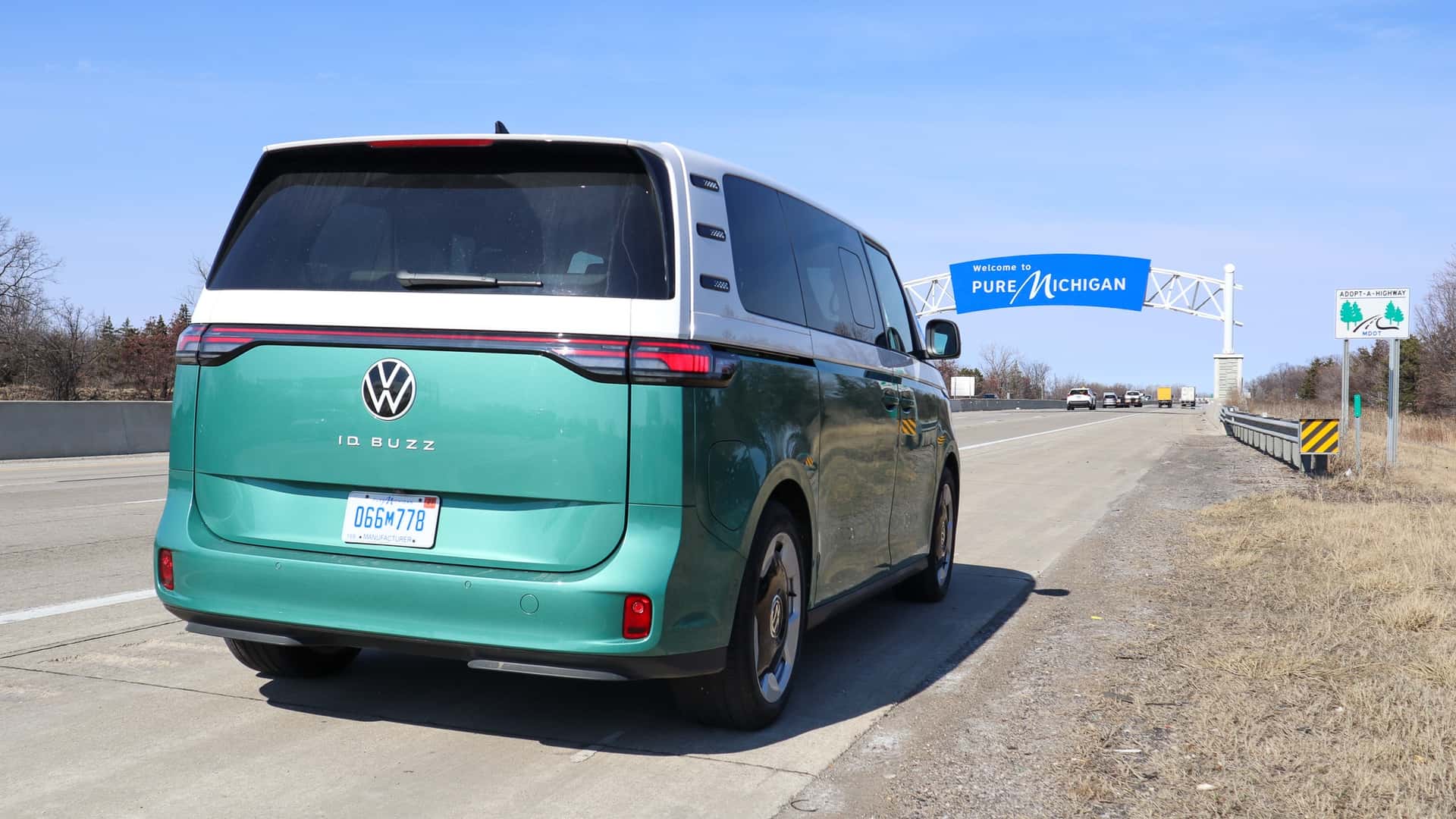
The Volkswagen ID. Buzz offers an estimated range of up to 234 miles. However, a trip to Detroit demonstrates that this vehicle can achieve much more than one might initially assume.
When Volkswagen dropped the ID. Buzz Initially, most of us were captivated by the large van's nostalgic design — even I, the resident curmudgeon at InsideEVs. However, once the initial excitement of owning this retro-style electric vehicle faded, it wasn't long before my more pragmatic side began to surface. To scrutinize the van’s technological features with greater skepticism.
Certainly, the van can seat up to seven people and theoretically seems like it would make for a great vehicle for a road trip. However, its non-aerodynamic design, significant curb weight, and comparatively lower estimated driving range suggest otherwise. Despite this, I stayed doubtful; after all, how do you truly define a road trip? For instance, does that include trying to recreate the " Explore the USA with your Chevrolet Is it about leisurely road trips across the nation? Or, is it making short visits to see a relative you're not particularly fond of, so they won't exclude you from their will?
To me, the ID. Buzz’s features appear as though they would suit perfectly that Alley. During the time the ID. Buzz was mine, I went on a short road trip—from my place in Columbus, OH, up to an area just north of Detroit, MI.
To be honest, I don't believe it performed poorly.
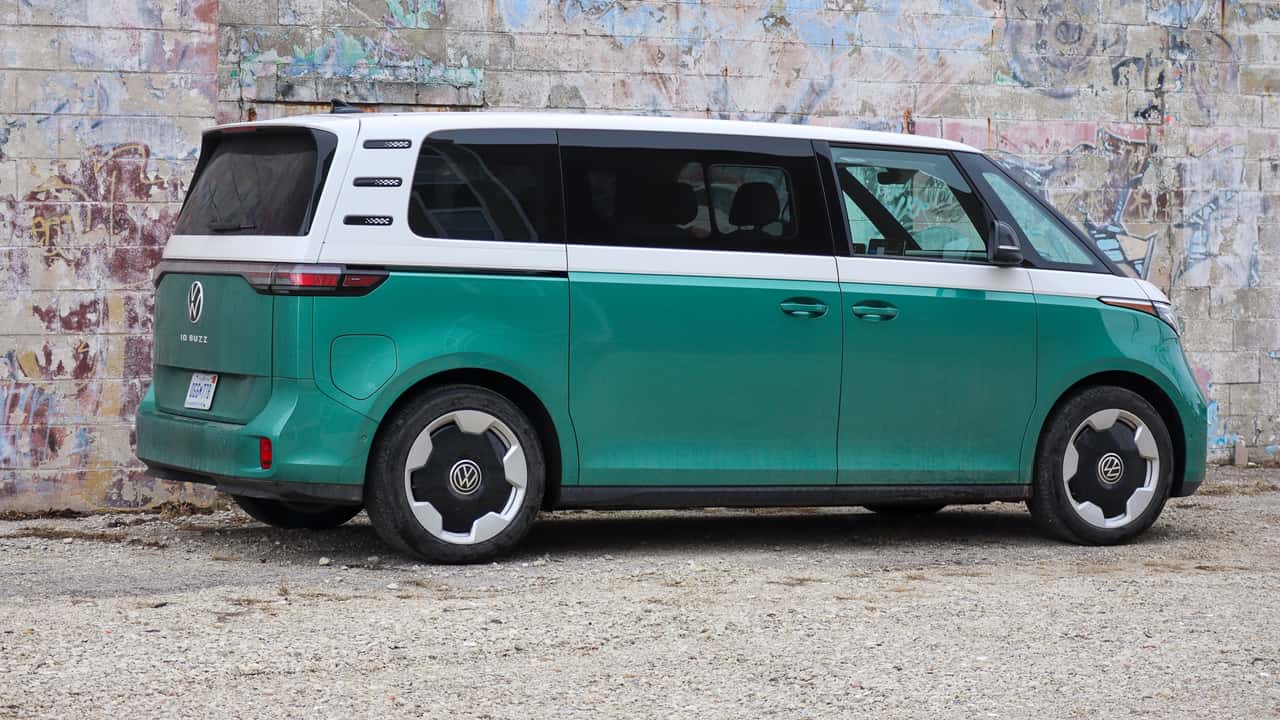
( Full Disclosure: Volkswagen provided me with a 2025 ID. Buzz Pro S for a week.
This rear-wheel-drive model features a single motor with a 91 kWh battery capacity (86 kWh available), providing an EPA-estimated range of 234 miles. Should you wish to acquire an identical van, the cost would be $66,040, which includes the destination charge.
Many automotive journalists typically handle vehicle pickups and returns through a third-party fleet service when they receive loaner cars for testing purposes. Here in central Ohio, I'm located somewhat farther from the closest such fleet company compared to the writers and reporters working with establishments like Car & Driver or Automotive News However, I remain within the Detroit circle of service for a press vehicle, despite being 213 miles distant.
I understand perfectly well that 213 miles might seem quite manageable for many electric vehicles. However, you may find it intriguing to learn about which models can accomplish this distance on a single charge versus those that cannot. The journey consists primarily of highways and rural routes, with average speeds typically exceeding 60 mph, which isn't ideal for electric vehicles known best at lower velocities. he Genesis GV70 Electrified managed the trip effortlessly. Did you compare the Kia EV9 with the Rivian R1S? , even amidst the chilly downpour.
Nonetheless, under perfect, mild, and bright circumstances, the Lexus RZ450e struggled to reach even 140 miles of range. Before requiring a recharge, unsurprisingly, the Fiat 500e with its 42 kWh battery managed roughly 115 miles of range—quite impressive for a car designed primarily for city driving rather than long trips.
Therefore, shouldn't the ID. Buzz's range of 234 miles suffice?
I began my journey slightly north of Columbus. The previous night, I hadn't charged the van at all, leaving me with just around 42% battery when I set off. I traveled approximately 20 miles north to Delaware, Ohio, to an EV Go charging station where I topped up to full capacity. It took roughly 45 minutes for the charge level to go from 36% to 100%; pretty efficient. However, since this detour added merely a handful of extra miles to my overall route, I won't consider it a formal "charging stop."
The new location I'm headed for is 189 miles distant, having started 24 miles further than initially planned. The rest of the journey remains unchanged, involving rural routes and highways where the lowest permissible speed hovers near 60 MPH. In Michigan, however, the typical highway speeds stay between 70 to 75 mph.
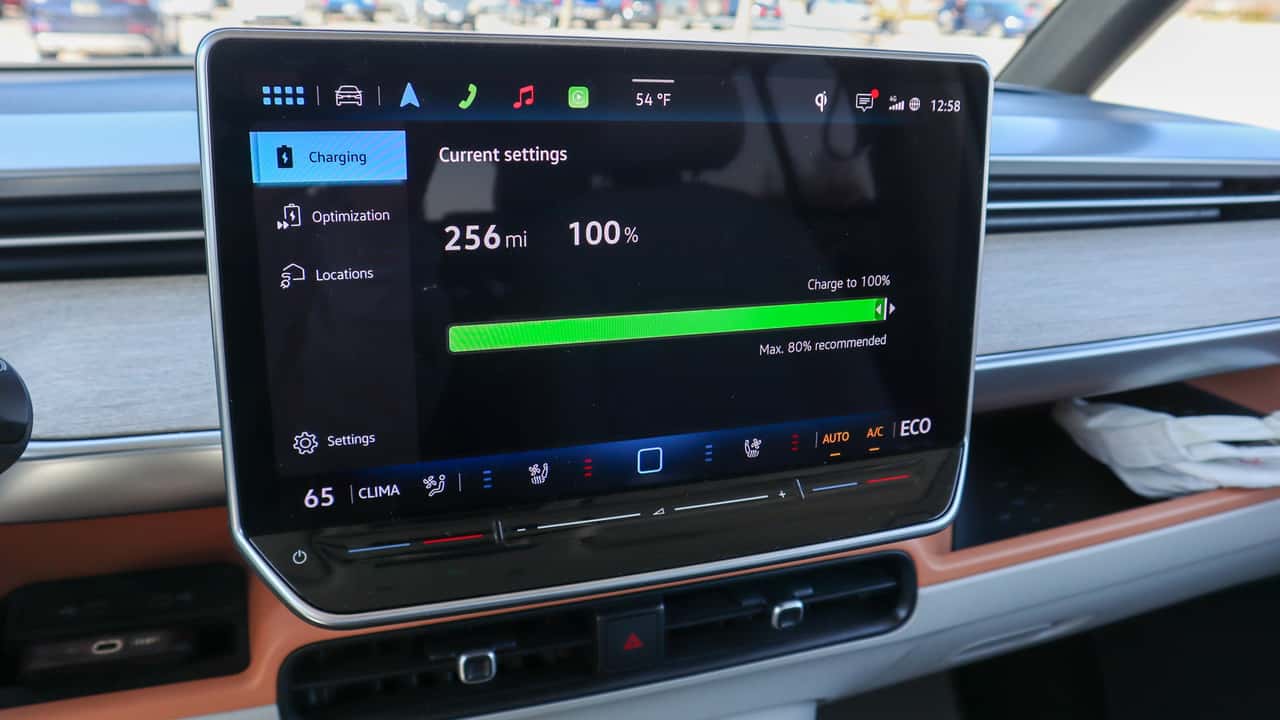
I'd love to embellish this post with tales of the difficulties faced during a grueling three-and-a half-hour drive, but I can't. The closest thing to an issue was my oversight about the temperature difference between Detroit and Ohio; it was much cooler at 39 degrees Fahrenheit in Detroit compared to the milder 65 degrees Fahrenheit (18 degrees Celsius) in Ohio, making for a chillier journey that boosted my energy usage.
When I passed the "Welcome To Michigan" sign, the car's energy efficiency had dropped slightly to just 0.1 mile per kWh from an initial 2.8 miles per kWh. This decrease led the vehicle’s navigation system to suggest stopping for a recharge en route to my final destination. In reality, this extra stop wasn't necessary at all.
I maintained the same speed as those around me with the ID. Buzz, without making any adjustments for pace or traffic conditions, and it performed precisely as intended. The vehicle successfully completed the entire 189-mile trip. On average, my speed was 64 mph, and during this drive, the electric van achieved an efficiency of 2.7 miles per kilowatt-hour. When I handed it back to the fleet management team, it still had approximately 14% battery remaining, indicating roughly 40 miles of range left. Assuming these figures were accurate, the ID. Buzz would have been capable of reaching a total range of nearly 229 miles—just shy by about six miles from its officially stated range.
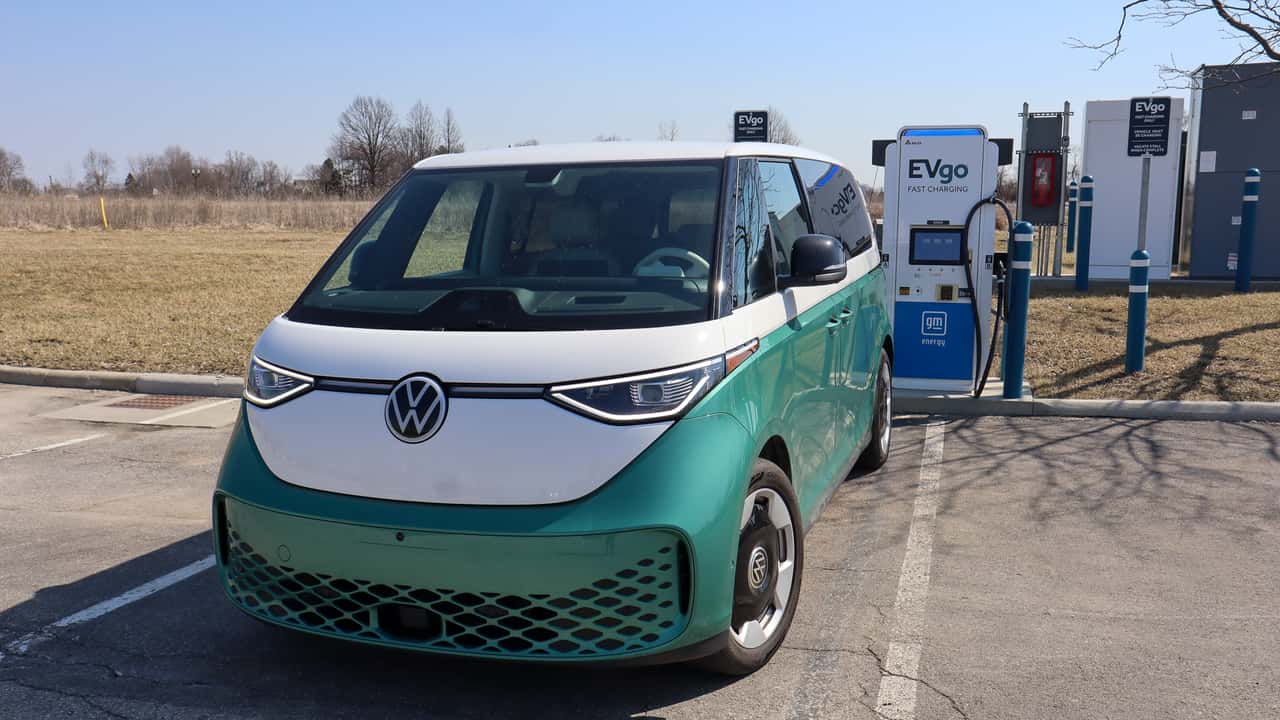
Some might argue that this constitutes a poor long-distance score, suggesting that my trip highlights how unprepared electric vehicles still are. However, I disagree with both points. For many individuals, such as myself, traveling around 200 miles at once may very well represent an upper limit. Yet, adding approximately 45 more minutes to recharge would allow the ID. Buzz to undertake yet another 200-mile excursion. Extending our route from Detroit, we could reach Toronto or approach Chicago. This entire span would equate to a complete eight hours behind the wheel, which takes only slightly longer compared to using a gasoline vehicle.
I won’t deny that the legitimate worries regarding charging infrastructure are irrelevant in this case. Undoubtedly, they matter. There’s a significant gap without functioning chargers between Columbus and Detroit. Without operational DC fast chargers, several electric vehicles I've traveled with on this path wouldn't have completed the journey. However, such chargers are available. Thus, where does the issue lie?
There's still quite a journey ahead of us. However, as I drive my electric vehicle over longer distances more frequently, I'm becoming increasingly certain that the issue isn't with the car itself or that manufacturers should be solely responsible for providing extra range which most people will rarely utilize.
Contact the author: Kevin.Williams@InsideEVs.com
Related Articles
- Volkswagen ID. Buzz Pro S: We Have It for the Week, What Would You Like to Learn About It?
- 2025 Volkswagen ID. Buzz: Cold Weather Range and Charging Evaluation
- Volkswagen ID.Buzz Winter Journey: 'An Absolute Mess'
- The VW ID. Buzz Exceeds Its EPA Range Rating in Actual Driving Conditions