March 1969: The Birth of Supersonic Luxury: Concorde Takes Flight

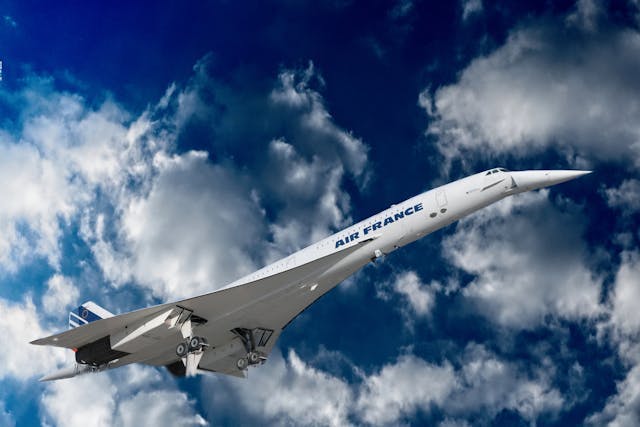
The ascent and decline of aviation's most stylish passenger jet
Has any plane ever achieved the cult status of the Concorde The distinctive, streamlined rotorcraft has not graced the sky since November 2003 but still stands as an emblem of its era.
The Concorde emerged as a product of various elements from the sixties era: advancements in aerospace technology, growth in air travel, and affordable fuel costs. It made its first commercial voyage in March 1969.
The concept aimed to significantly reduce travel time between continents, cutting down an eight-hour journey like the one from London to New York to just three-and-a-half hours. As a result, corporate attorneys could attend morning meetings with their American counterparts in London and return home the very same day. Back in 1985, during the Band Aid concert, Phil Collins played at Wembley Stadium in London and subsequently took off to perform at the event’s segment in Philadelphia before it concluded.
Thanks to Concorde.
The start of the decline for Concorde
On July 25, 2000, the start of the end for Concorde began with the crash of Air France Flight 4590 soon after taking off. This accident resulted in the deaths of all 109 passengers aboard as well as four individuals on the ground. Up until this point, Concorde had held the reputation of being the most secure plane in operation. Services using these planes came to a halt from their suspension until November 2001. All remaining Concordes ceased flying in 2003, exactly 27 years following the commencement of regular flights.
A majority of the 20 constructed models are currently accessible at different sites across Europe and North America. Additionally, there is an exclusive engineering museum located in Chihuahua, Mexico.
6 features that set the Concorde apart
· During "supercruising," the aircraft traveled at double the speed of sound for three-quarters of the journey.
• The quickest transatlantic journey took place on February 7, 1996, flying from New York’s John F. Kennedy Airport to London Heathrow, completing the trip in just 2 hours, 52 minutes, and 59 seconds from departure to landing.
· The naming dispute over Concorde—rather than the more English-sounding Concord—was a source of significant contention between the French and British collaborators.
· To prevent the aluminum framework from overheating because of heat absorption, the exterior was coated with highly reflective white paint.
· The Concorde’s high cruising altitude of 17,000 meters resulted in passengers onboard being exposed to nearly double the amount of cosmic ionizing radiation compared to individuals on standard long-distance flights.
• Boeing aimed to join the supersonic competition with the 2707 but had to cancel this project in 1971 without building any prototypes.
(Michael Leahy. Image: Franz Hermann / Pexels)